

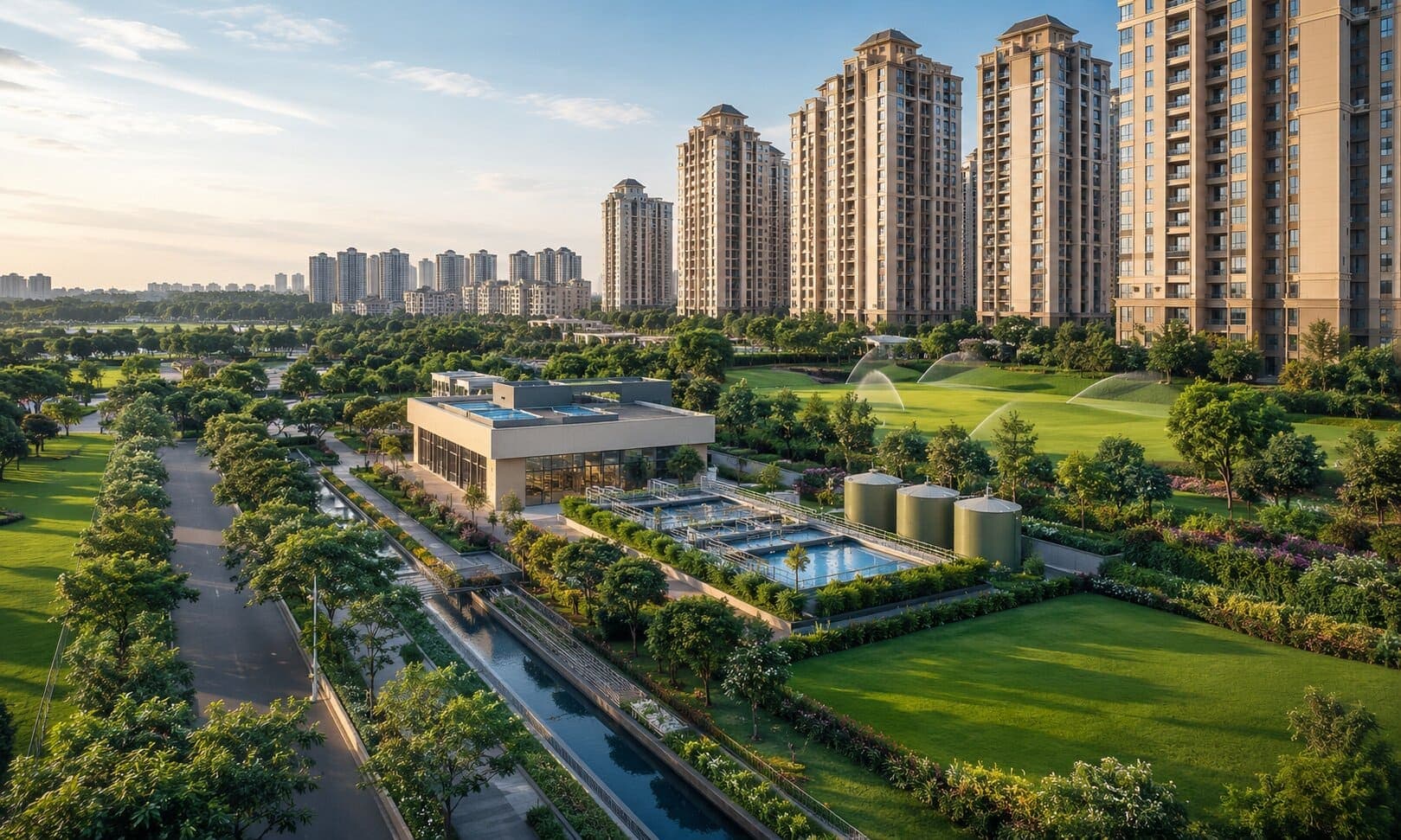
A township that treats its own wastewater is not “eco-conscious.” It is future-ready. With a Sewage Treatment Plant capacity of 1.8 lakh litres per day, Hiranandani Parks, Oragadam - Chennai converts a daily urban liability into a controlled, reusable resource.
Science is clear: treated wastewater can be safely reused for non-potable purposes such as landscape irrigation, toilet flushing, industrial processes and groundwater-supporting systems when managed to quality standards. This reduces dependence on fresh water and builds resilience in water-stressed urban regions.
At Hiranandani Parks, a 360-acre integrated township, this is not a small operational detail. It is infrastructure muscle. Every litre treated is a litre that does not blindly burden municipal drains, overload natural water bodies or increase the demand for potable water where it is not required. Wastewater treatment also helps reduce environmental pollution and supports public health by lowering exposure to unsafe discharge. The World Health Organization identifies wastewater reuse and safe sanitation management as critical parts of modern water and health strategy.
The advantage is direct: greener landscapes, better water discipline, reduced ecological stress and a cleaner internal environment. The World Bank also notes that wastewater treatment delivers environmental, health and economic benefits when water and by-products are reused efficiently.
This is why townships like Hiranandani Parks win. They do not wait for broken city systems to catch up. They build their own.
An STP is not a backend utility. It is proof of serious urban planning. In tomorrow’s real estate, water intelligence will separate landmark townships from ordinary concrete clusters.